›
Comics as a Tool for Democracy and Social Inclusion
›
›
Comics as a Tool for Democracy and Social Inclusion
›
›
Comics as a Tool for Democracy and Social Inclusion
›
›
Comics as a Tool for Democracy and Social Inclusion
›
Wednesday, 27 May 2026 • Lesvos Campus, University Hill • Hybrid Event
Part of this event
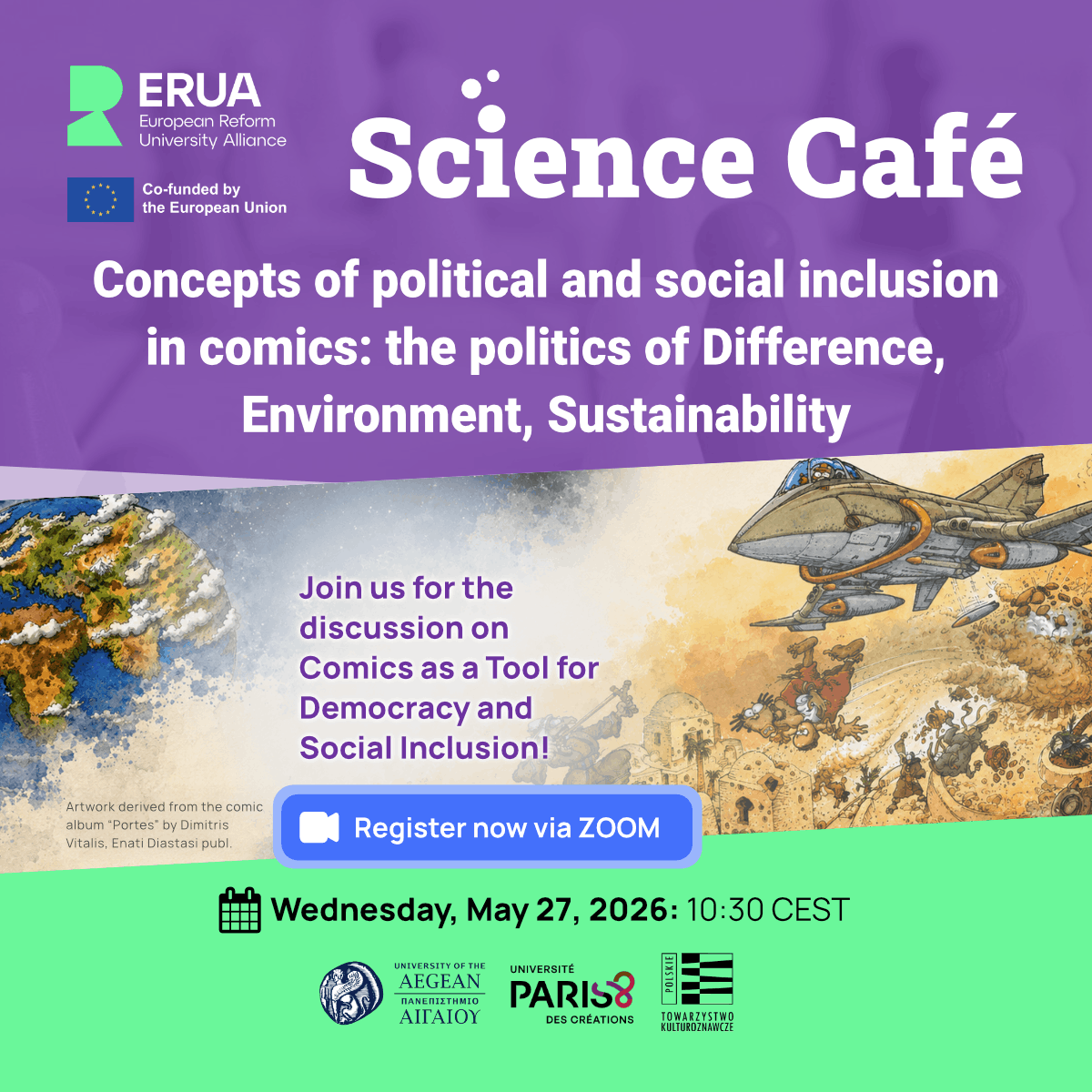
Concepts of political and social inclusion in comics: the politics of Difference, Environment, Sustainability
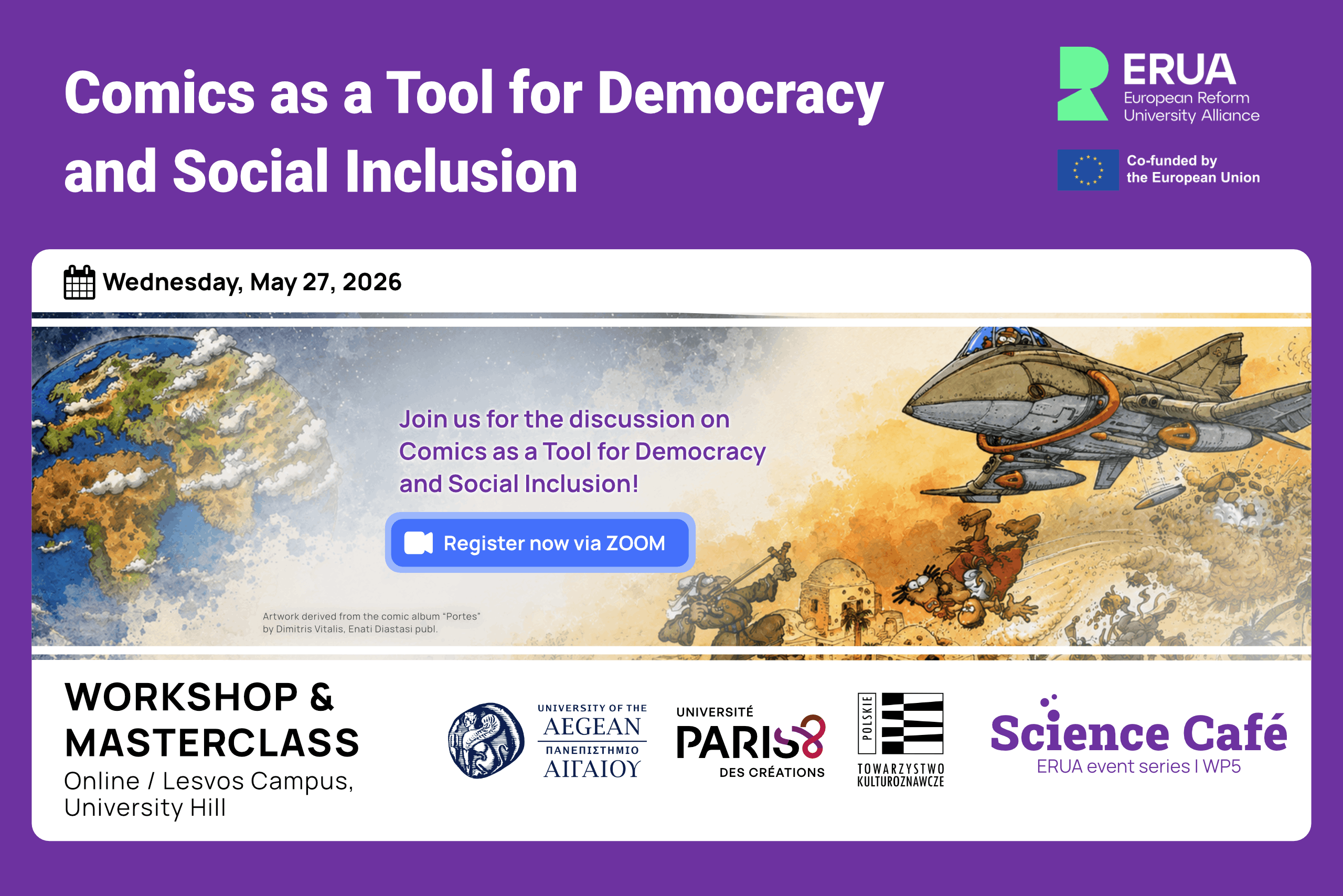
Artwork derived from the comic album Portes by Dimitris Vitalis, Enati Diastasi publ.
The Department of Cultural Technology and Communication (Mytilene, Lesvos) has a long-standing focus on comics, animation, digital media, cultural representation and participatory communication, and has hosted three national and international comics conferences and exhibitions in Greece — making it a natural host for a workshop at the intersection of visual culture, education and human rights. The Department is now organizing a hybrid (onsite and online) COMICS EVENT: WORKSHOP & MASTERCLASS that will take place on the 27th of May 2026 (Wednesday) at the Lesvos Campus, University Hill.
Comics and graphic narratives have evolved far beyond their popular-culture origins to become powerful instruments of critical inquiry, social commentary and civic education. This sequential art has repeatedly proven its capacity to address the most pressing issues of democratic life: authoritarianism, displacement, gender violence, memory and the limits of human rights. Yet this medium remains less developed in most European Universities curricula. The EVENT will explore this tradition critically, examining how the medium has been used to amplify marginalised voices, bear witness to historical injustice, and build solidarity.
The EVENT, by combining a workshop with a comics masterclass, aims at bringing together research, practice and administrative aspects of the so called “ninth art”, creating a unique space for dialogue between academic inquiry and creative practice — fully aligned with ERUA’s commitment to innovative, reform-oriented higher education and research. Comics often reach audiences more effectively than academic publications, making this medium a strategic vehicle for civic education and rights advocacy across Europe.
Times shown in EEST (Eastern European Summer Time, UTC+3, local Lesvos time), CEST (Central European Summer Time, UTC+2), and WEST (Western European Summer Time, UTC+1).
| Time (EEST) | Session |
|---|---|
|
09:00 (EEST) 08:00 (CEST) 07:00 (WEST) |
WELCOME & FRAMING
Opening Remarks
Prof. Evangelia Kavakli, Prof. Evi Sampanikou, Prof. Arnaud Regnauld and Prof. Jan Stasienko, featuring Comics Artist Dimitris Vitalis Introduction to the workshop’s intellectual agenda: comics between popular culture, political art and educational practice. |
|
10:00–10:30 (EEST) 09:00–09:30 (CEST) 08:00–08:30 (WEST) |
COFFEE BREAK
Coffee Break
EXHIBITION OPENING
Exhibition Opening
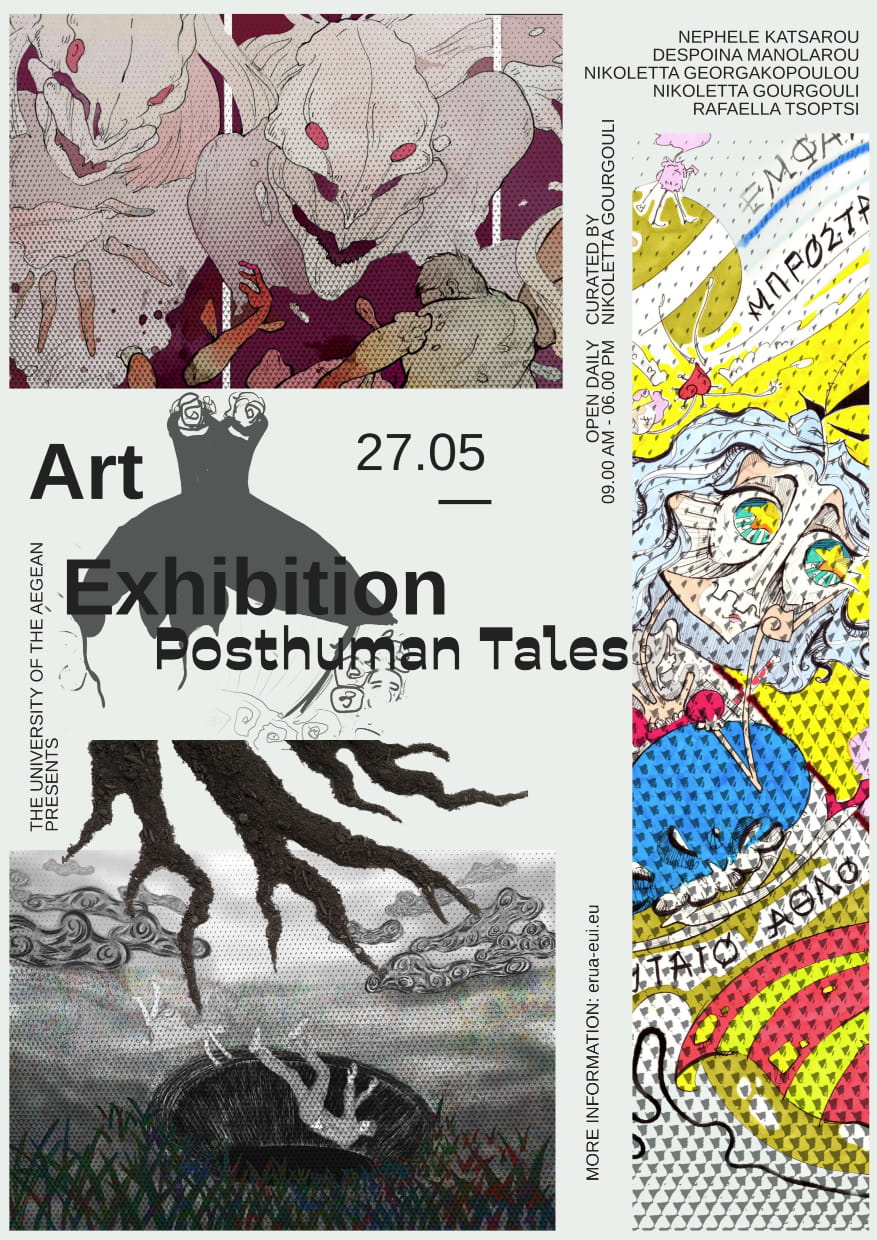
Social Sciences Building — Second Floor Map Curator: Nikoletta Gourgouli, Artist, PhD Student Artists: Nefeli Katsarou • Despoina Manolarou • Rafaella Tsoptsi • Nikoletta Georgakopoulou |
|
10:30–11:30 (EEST) 09:30–10:30 (CEST) 08:30–09:30 (WEST) |
ROUND TABLE
Comics Festivals: Openness, Democracy, Inclusion and the Public
Chair: Panos Kritikos, PhD, PostDoc Candidate, Comic n’ Play (Thessaloniki) Session conducted mainly in Greek
|
|
11:30–13:30 (EEST) 10:30–12:30 (CEST) 09:30–11:30 (WEST) |
5th SCIENCE CAFÉ
Concepts of political and social inclusion in comics — the politics of Difference, Environment, Sustainability
Chairs: Evi Sampanikou, Professor & Nikoletta Gourgouli, PhD Student • Dept of Cultural Technology and Communication 12 minutes per speaker • Online via Zoom
|
|
13:30–14:30 (EEST) 12:30–13:30 (CEST) 11:30–12:30 (WEST) |
LUNCH BREAK
Lunch Break
|
|
14:30–15:30 (EEST) 13:30–14:30 (CEST) 12:30–13:30 (WEST) |
DISCUSSION
Comics, Democracy, Social Rights, Environment, Sustainability
Chair: Evangelia Kavakli, Professor, Dept of Cultural Technology and Communication Short comments and open discussion with members of the online and onsite audience. Introductory talks:
Oskar Dobczyński
“I saw funny gum-man” – Critical Analysis of Discourse about One Piece Manga’s Political Narratives
Abstract
One Piece is Eiichiro Oda’s long-running, best-selling fantasy adventure manga that follows Monkey D. Luffy and his pirate crew as they travel across the world challenging many empires’ corruption, while also confronting prevalent slavery, racism and other social disparities with their own egalitarian vision of justice. This paper examines a recurrent claim in online discussions that One Piece is not political. It traces how claims of the manga’s apoliticism are constructed, defended, and also identifies who creates and propagates these narratives. Using critical discourse analysis (CDA), the study closely reads posts and threads from Twitter/X and Reddit, alongside YouTube videos. The latter category seems particularly interesting as some large-audience manga and anime influencers tend to depoliticize One Piece, and because their audiences treat them as authoritative interpreters of the medium, their opinions may shape wider public understanding.
Dimitris Tsikordanos
“Violence in Japanese Pop Culture: A Case Study of Berserk”
Abstract
This presentation focuses on analyzing the use and depiction of violence in Japanese pop culture and, more specifically, in manga. In particular, it is a case study of Kentaro Miura’s “Berserk,” delving into the plot, themes, depiction of violence, and its meanings, while also attempting to understand the significance of violence in pop culture. |
|
16:00–19:00 (EEST) 15:00–18:00 (CEST) 14:00–17:00 (WEST) |
MASTERCLASS
“Create your own comic strips”
Georgia Zachari, Comics Artist Audience: 10–15 members of the academic and urban community. |
|
20:00–21:30 (EEST) 19:00–20:30 (CEST) 18:00–19:30 (WEST) |
BOOK PRESENTATION
Pavlos Sidiropoulos, Finally (Παύλος Σιδηρόπουλος, Εν Κατακλείδι)
A Graphic Novel by Ilias Katirtzigianoglou and Konstantinos Sklavenitis Mikros Iros Publications, Athens 2026 Book and Art, Komninaki Street, Mytilini Map |
Roundtable Speakers / 5th Science Café Speakers / Masterclass

Maîtresse de conférences, Université Paris 8 (UP8)
UR TransCrit, Département d'Études des Pays Anglophones

Maîtresse de conférences, Université Paris 8 (UP8)
UFR SEPF, Département de sciences de l'éducation, LIAgE
AGH University of Krakow
Vice-president, Association of Pop Culture Researchers and Pop Culture Education "Trickster"

MBA, Project Manager, Greek Film Centre – Hellenic Film Commission

Comics Artist
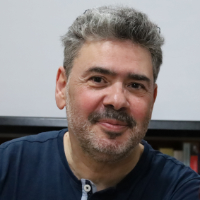
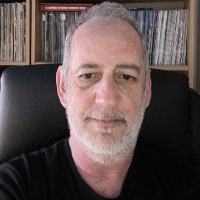
PhD, Comics and Graphic Novels Creator
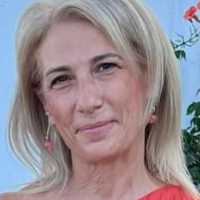
Assistant Professor, University of the Aegean (UAEGEAN)
Department of Preschool Education and Educational Design
Associate Professor, University of the Aegean (UAEGEAN)
Department of Preschool Education and Educational Design

PhD, Teaching Associate NUA / Founder, Athens Comics Library
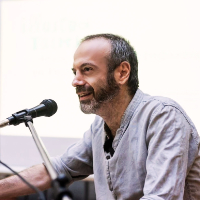
Comicdom CON Athens, Co-organizer

Co-Administrator and Co-organizer; Radio Producer, Musician
Comic n' Play (Thessaloniki)
Comics Artist

MA Student, Cultural Studies
AGH University of Kraków

Student
Department of Cultural Technology and Communication, University of the Aegean
Moderators, Chairs & Organizers

Professor
University of the Aegean (UAEGEAN)

Professor, University of the Aegean (UAEGEAN)
Department of Cultural Technology and Communication
Professor
ERUA Academic Coordinator, Université Paris 8 — University of Creations
Professor of Games and Cultural Studies
Department of Information Technologies and Media, AGH University of Kraków
PhD Candidate, University of the Aegean (UAEGEAN)
Department of Cultural Technology and Communication
PhD, PostDoc Candidate; Co-Administrator and Co-organizer
Comic n' Play (Thessaloniki)
A. University of the Aegean
Evangelia Kavakli • Evi Sampanikou • Panos Kritikos • Nikoletta Gourgouli • Yiannis Koukoulas • Marianna Misiou
B. Université Paris 8
Arnaud Regnauld
C. The Kraków Branch of the Polish Cultural Studies Association
Jan Stasienko
D. Researchers — Dept of Cultural Technology and Communication
Myrto Tselenti, MBA, Project Manager — Greek Film Centre
Soloup (Antonis Nikolopoulos), PhD — Comics and Graphic Novels Creator
E. Festival Administrators
Lida Tsene • Nikos Dalampyras



Creative & Interregional Knowledge Communities (CIKCs) — ERUA WP5
Knowledge Communities are the core collaborative spaces of the ERUA Science Shop. They bring together students, academics, early-career researchers, regional authorities, civic actors, and societal partners to address shared challenges through structured dialogue and co-creation. This event is connected to the Creative & Artistic Engagement Knowledge Community, reflecting the role of comics as a medium for intercultural dialogue, artistic experimentation, and societal change.
Linking SDG-based knowledge with regional transformation and green transition agendas. Connects academic expertise with place-based innovation, positioning regions as living laboratories for sustainable development and interregional cooperation.
Fostering democratic participation, inclusion, and community-based solutions. Brings together universities and civic actors to address coexistence, governance, and social cohesion — from structured dialogue to community-based pilots across ERUA regions.
Bridging arts and sciences to stimulate intercultural dialogue and creative experimentation. Recognises creativity as a method of knowledge production and societal change, building on the momentum of the ERUA Arts & Edges Biennale and cross-partner artistic initiatives.
ERUA (European Reform University Alliance) is an alliance of European universities committed to reform and innovation in higher education. The alliance focuses on interdisciplinary collaboration, social engagement, and creating dynamic partnerships between academic institutions, local communities, and external stakeholders to address complex social challenges.

ERUA
European Reform University Alliance
The University of the Aegean is a multi-campus public university in Greece, established in 1984. With campuses across several Greek islands including Rhodes, Lesvos, Chios, Samos, Syros, and Lemnos, it offers a unique educational environment that combines academic excellence with the distinctive character of insular Greece. The university is known for its innovative programs and strong connections to local communities and regional development.

University of the Aegean
Πανεπιστήμιο Αιγαίου