Enterprise Modeling for Social Impact (EM4SI)
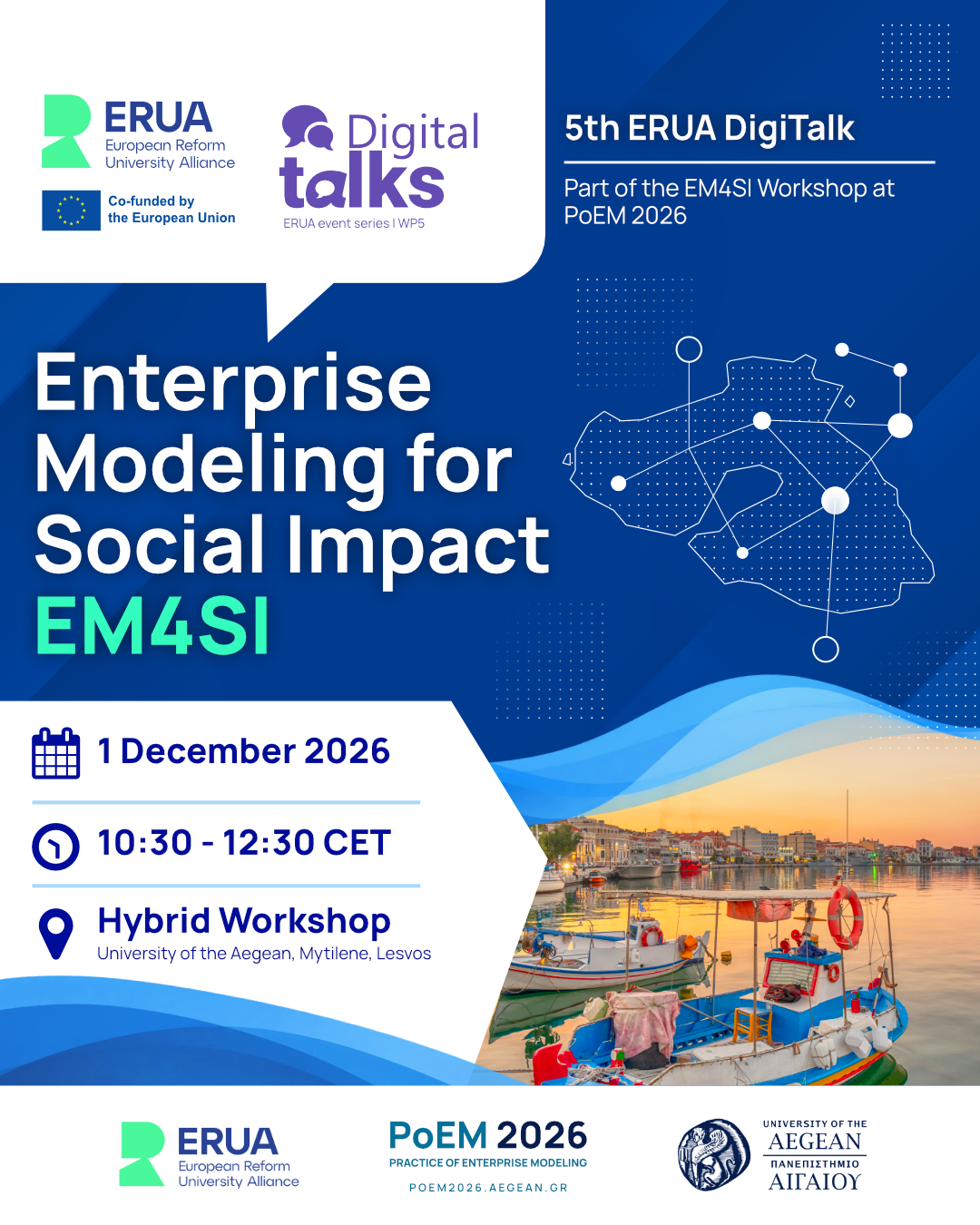
Date/Time: Tuesday, December 1, 2026 | 10:30 – 12:30 CET
Hybrid Workshop — University of the Aegean, Mytilene, Lesvos, and online
The 5th ERUA DigiTalk is part of the Enterprise Modeling for Social Impact (EM4SI) Workshop at PoEM 2026, the 19th IFIP WG8.1 Working Conference on the Practice of Enterprise Modeling, hosted by the University of the Aegean and organised in collaboration with the European Reform University Alliance (ERUA).
Live from the University of the Aegean campus in Lesvos, the session follows a hybrid, discussion-based and participatory format. It connects to the ERUA Work Package 5 and Interregional Creative Knowledge Communities initiatives.
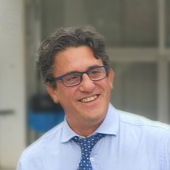
Keynote Speaker
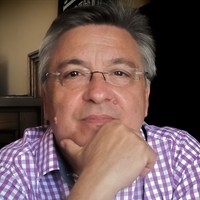
- Prof. Peri Loucopoulos, Emeritus Professor, Loughborough University, UK; Director, Institute of Digital Innovation and Research, Ireland
- Enterprise Modelling for Social Impact: A Critique and Lessons from Interventions Against Online Hostile NarrativesAbstract Bio
Professor Peri Loucopoulos holds a B.Sc. in Mathematical Sciences and M.Sc. and PhD degrees in Computer Science. He began his professional career as an analyst and project leader for a large financial institution in the City of London. He held academic appointments in the United Kingdom, in the Department of Computation at the University of Manchester Institute of Science & Technology (UMIST), as Lecturer, Senior Lecturer and Full Professor in Information Systems Engineering. He also served as Full Professor in Information Systems at the Business School of Loughborough University, UK. He currently holds the post of Director at the Institute of Digital Innovation and Research (IDIR) in Ireland. He was the Editor-in-Chief of the Journal of Requirements Engineering for over 30 years. He is Associate Editor of Information Systems and of the Journal of Database Management, and serves on the editorial boards of 11 other journals. In 2005 he received the UK OR Society’s President’s Medal and in 2008 he was awarded the Edelman Laureate medal. His research focuses on supporting the transformation of large, complex and dynamic enterprise systems through the provision of information systems.
Enterprise, conceptual and requirements modelling share a common aim, yet their engagement with social problems remains uneven. This keynote reviews their contributions to social impact, drawing on sustainability, human values and digital humanism. It then focuses on online hostile narratives, a problem where detection and moderation are advancing but the means of organised, accountable intervention are not. Drawing on recent research work we will review a modelling framework designed to address the problem of online hostile narratives from a perspective capable of integrating technological, linguistic, ethical, legal, and societal concerns. The talk closes with ten research initiatives and questions for the workshop community: how modelling can help societies counter harmful narratives and be held to account for it.
- Enterprise Modelling for Social Impact: A Critique and Lessons from Interventions Against Online Hostile Narratives
Workshop Chairs
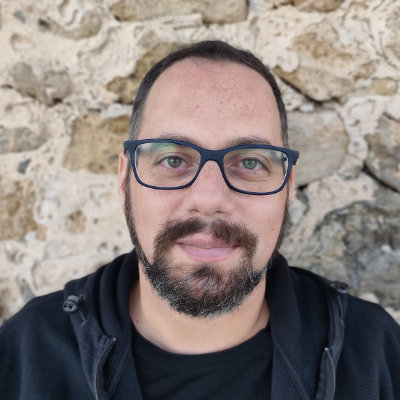
- George Stroggylopoulos, University of the Aegean, Greece
- Ioannis Katsounis, University of the Aegean, Greece
- Eleni Zarimi, University of the Aegean, Greece
Call for Contributions
Researchers across all ERUA regions, practitioners, university alliances, NGOs and public sector organisations are invited to share ongoing or planned research, practical experiences, case studies, emerging ideas or real-world challenges. Work in progress is welcome.
Topics
- Modeling theories for social impact and societal change
- Human factors and participatory modeling
- Metrics, indicators and traceability frameworks for measuring social impact
Contribution formats (CEUR-WS single-column template)
- Presentations: up to 7 slides
- Whitepapers: up to 5 pages
- Extended abstracts: 1–2 pages
- Short (position) papers: 5–9 pages
- Full papers: 10–12 pages
Important dates
- Submission deadline: October 30, 2026 (extended)
- Author notification: November 3, 2026
- Early registration: until November 6, 2026
- Camera-ready papers: November 17, 2026
- Workshop day: December 1, 2026
Short and full papers undergo peer review and are intended for the online CEUR-WS proceedings of PoEM 2026.
Accepted in-person participants affiliated with an ERUA institution can apply for travel and accommodation funding through their home university’s ERUA Office.
Submit via EasyChair (select “EM4SI”) EM4SI Workshop website ERUA announcement
Contact: kavakli@aegean.gr (subject “EM4SI”)
Keywords: Enterprise Modeling, Conceptual Modeling, Requirements Modeling, Social Impact, Participatory Modeling, Digital Humanism, Online Hostile Narratives, PoEM 2026
 Related to SDG 10:
Reduced Inequalities — modelling for social impact and inclusion, countering harmful narratives that target vulnerable groups Related to SDG 17:
Partnerships for the Goals — cross-sector collaboration between researchers, practitioners, NGOs and public sector organisations across ERUA regions Related to SDG 8:
Decent Work and Economic Growth — enterprise modelling for the transformation of organisations and enterprise systems Related to SDG 16:
Peace, Justice and Strong Institutions — organised, accountable intervention against online hostile narratives
Date/Time: Tuesday, December 1, 2026 | 10:30 – 12:30 CET
Hybrid Workshop — University of the Aegean, Mytilene, Lesvos, and online
Join us live from the University of the Aegean in Mytilene, Lesvos, or online.
Interested in attending this event?
Attending the PoEM 2026 conference in person? Conference registration is separate: PoEM 2026 registration
Green Behaviours for Sustainable Communities: Swap Party, Civic Engagement and Environmental Responsibility
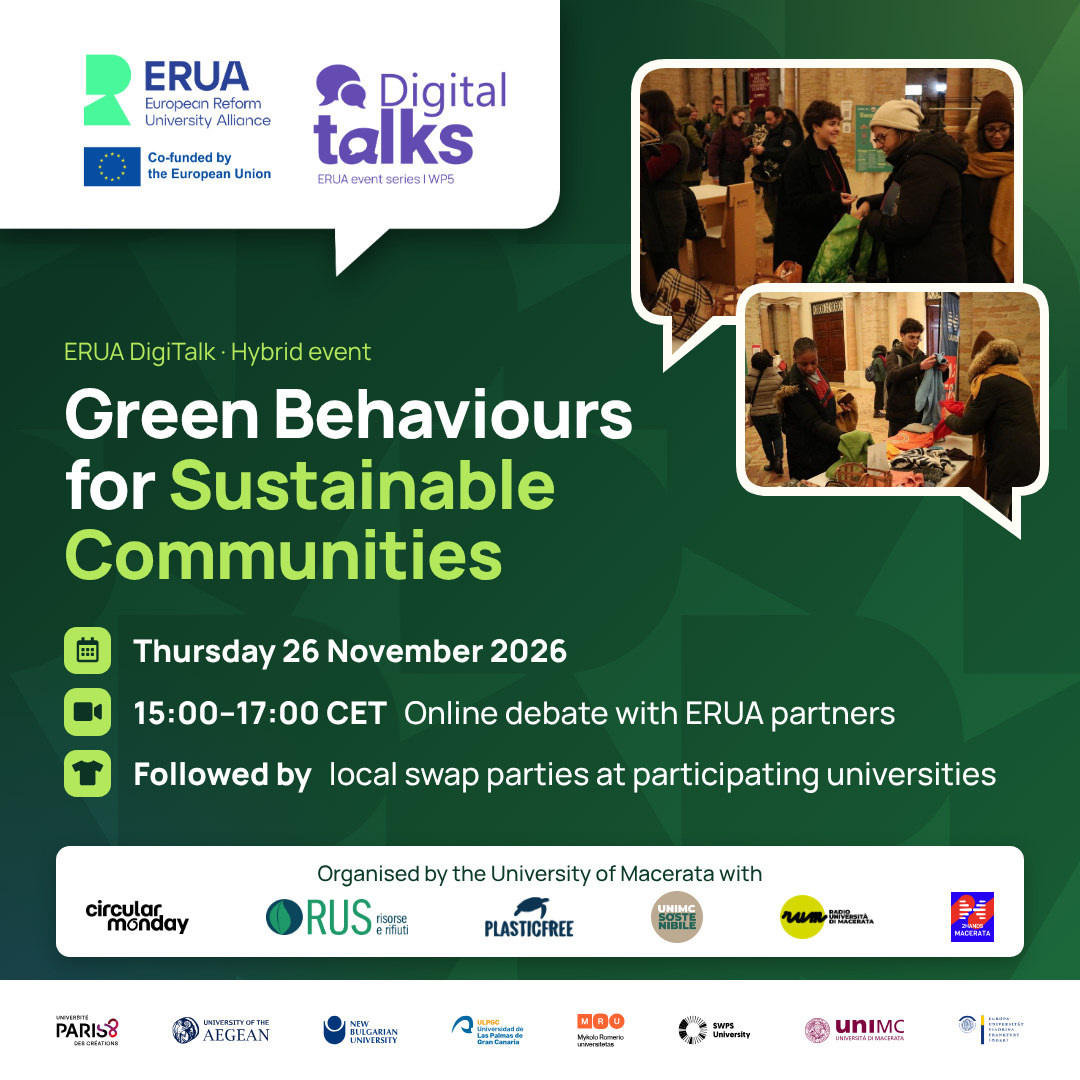
Date/Time: Thursday, November 26, 2026 | 15:00 – 17:00 CET (14:00–16:00 WET / 16:00–18:00 EET)
Online debate with ERUA partners (Zoom)
Followed by local swap parties at participating universities
Organised by the University of Macerata (UNIMC) within ERUA WP5 – Civic Engagement and Public Mission, this hybrid DigiTalk brings together an online debate with ERUA partners and local swap parties at participating universities, each at its own local time.
The debate focuses on environmental behaviours in higher education institutions and on sustainable lifestyles: responsible consumption, waste reduction, the circular economy and environmentally friendly graduation celebrations. The aim is to engage students, citizens and local stakeholders in sustainable lifestyles through participatory practices, to raise awareness of environmental responsibility and to encourage behavioural change.
Programme
- Welcome and introduction
Mara Cerquetti, professor in management and Rector’s Delegate for Environmental Sustainability and Transports, UniMC - Sustainability is an ambition. Responsibility is what we do about it.
Sauro Stacchiotti, Costing & Sustainability Senior Manager, iGuzzini illuminazione - Participatory Campus Renaturalisation: The UniVerde Experience at ULPGC
Luis Mazorra, Head of Sustainability and ULPGC representative on the ERUA Green and Inclusive Committee - The challenge of narrating the climate crisis via podcasts | Green entrepreneurship and circular economy stories in Marche region
Lucrezia Cinella, PhD student, and Danilo Monterubbianesi, journalist. Winners of the idea’s competition “Frequenze sostenibili” for podcasts - From Awareness to Action: Universities as Communities of Change
Margherita Maiani, Secretary General, Plastic Free ODV Onlus - Environmental impact of degree celebration at the University of Florence: how can we get a sustainable party?
Sara Falsini, Post-doc researcher, Department of Biology, University of Florence - RUS guidelines and best practices for student and civic engagement: the Swap Party
Maria Chiara Lentinio, UniMC representative on the RUS Student Community Technical Committee - Conscious choices, collective impact: joining the Circular Monday movement
Benedetta Maurizi, Circular Monday Ambassador, Italian Team - Q&A
Mara Cerquetti, professor in management and Rector’s Delegate for Environmental Sustainability and Transports, UniMC - Closing remarks
Mara Cerquetti, professor in management and Rector’s Delegate for Environmental Sustainability and Transports, UniMC
Keywords: Green Transition, Sustainability, Civic Engagement, Community Participation, Swap Party, Circular Economy
 Related to SDG 11:
Sustainable Cities and Communities Related to SDG 12:
Responsible Consumption and Production Related to SDG 13:
Climate Action- Related to SDG 17:
Partnerships for the Goals
Date/Time: Thursday, November 26, 2026 | 15:00 – 17:00 CET (14:00–16:00 WET / 16:00–18:00 EET)
Online debate with ERUA partners (Zoom)
Followed by local swap parties at participating universities
Interested in attending this event?
ERUA iDeaThon 2026: Online capacity-building session 1
Date/Time: Monday, November 2, 2026 | 16:00 – 17:30 CET
15:00–16:30 WET (Las Palmas) · 16:00–17:30 CET (Paris, Frankfurt (Oder), Warsaw, Macerata) · 17:00–18:30 EET (Mytilene, Sofia, Vilnius)
Online via Zoom
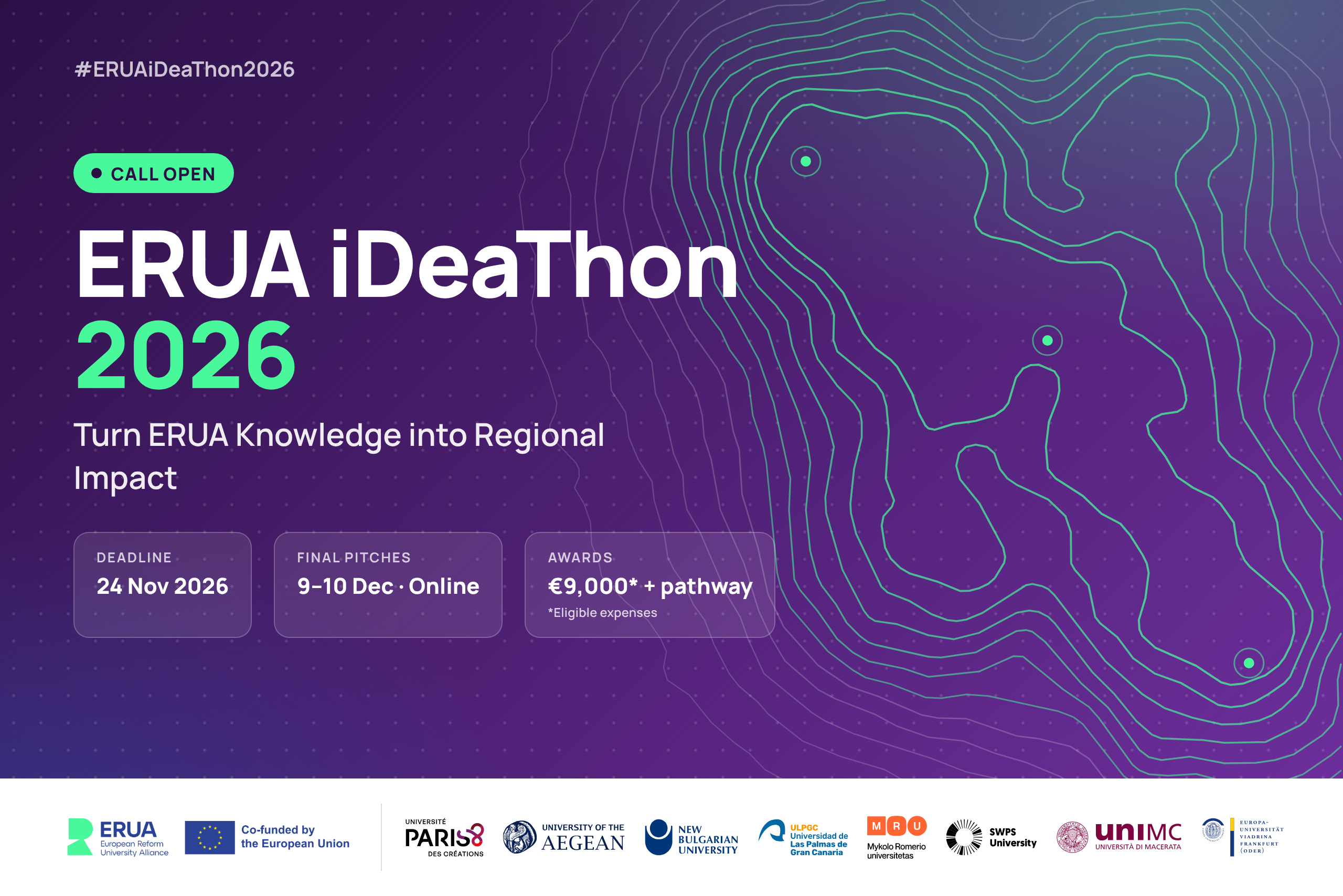
Get to know the challenge, the five thematic areas and the ERUA resources available to participants. This online session is for all applicants of the ERUA iDeaThon 2026.
Agenda
- Welcome & Introduction — Prof. Evangelia Kavakli (UAEGEAN)
What is the ERUA iDeaThon? Objectives, expected outcomes and the Challenge-to-Impact approach. - Regional Societal Challenges — María Victoria Ojeda (ULPGC)
ERUA’s five thematic areas, identification of regional societal challenges and examples from ERUA/WP6 research. - From Challenges to Social Entrepreneurship Ideas: From iDeaThon to Bootcamp and Hackathon — Justyna Berniak-Woźny (SWPS)
Principles of social entrepreneurship, how to transform societal challenges into innovative ideas with social value, and how these ideas can be further developed, refined and tested through the Bootcamp and Hackathon. - Exploring ERUA’s Knowledge — Ioannis Apostolopoulos (UAEGEAN)
Social Entrepreneurship Lab, ECOS/AEIPHORIA, the ERUA Digital Campus. - Application, Eligibility, Evaluation Criteria, Deadlines — George Strogylopoulos (UAEGEAN)
Eligibility, application form, participation requirements and deadlines. Assessment criteria and what evaluators will look for in the proposals. - Awards & Opportunities — Paula Rodríguez Chirino (ULPGC)
Awards, recognition and opportunities for the winning ideas. - Questions & Answers — All participants
Open discussion.
Keywords: ERUA iDeaThon, Social Entrepreneurship, Challenge-to-Impact, Regional Societal Challenges, Capacity Building
You can watch below or open it in Google Drive for the recording of the Event
Doing Democracy – Demokracja partycypacyjna w czasach dezinformacji
Data i godzina: czwartek, 23 kwietnia 2026 | 18:30 – 20:00 CET
Na żywo z ratusza we Frankfurcie nad Odrą, sala rady miejskiej — dodatkowo transmisja na żywo przez Zoom
Tłumaczenie symultaniczne na język angielski
Ten DigiTalk ERUA jest częścią Doing Democracy: Connecting Academia and Civil Society Across Borders — niemiecko-polskiego wydarzenia networkingowego, które tworzy wspólną przestrzeń wymiany między nauką a społeczeństwem obywatelskim wokół pilnych pytań o demokrację, odporność i partycypację ponad granicami.
W czasach, gdy procesy demokratyczne są coraz częściej podważane przez dezinformację, polaryzację i spadek zaufania, skupiamy się na tym, jak w praktyce wzmacniać demokrację partycypacyjną. Łączymy perspektywy akademickie z doświadczeniem społeczeństwa obywatelskiego: jak budować odporność demokratyczną, jakie formy uczestnictwa są dziś skuteczne oraz jak współpraca badań i praktyki może odpowiadać na nowe wyzwania.
Transmitowana na żywo z ratusza we Frankfurcie nad Odrą debata okrągłego stołu z udziałem wiodących naukowców i głosów społeczeństwa obywatelskiego, moderowana przez dr Anję Hennig (Europa-Universität Viadrina). Krótkie refleksje aktorów społeczeństwa obywatelskiego uzupełnią dyskusję. Sesję otworzy Claus Junghanns, burmistrz Frankfurtu nad Odrą.

Kto może wziąć udział?
- Mieszkańcy, studenci i naukowcy zainteresowani demokracją i uczestnictwem obywatelskim
- Organizacje społeczeństwa obywatelskiego i NGO pracujące na rzecz odporności demokratycznej
- Naukowcy i praktycy politologii, zarządzania i medialnej sprawności
- Członkowie społeczności ERUA we wszystkich instytucjach partnerskich
- Każdy, komu zależy na skutkach dezinformacji dla procesów demokratycznych
Wstęp wolny; wydarzenie otwarte
Prelegenci – panel:
Welcome address:
Claus Junghanns, Mayor of Frankfurt (Oder)
Roundtable:
- Prof. Radosław Markowski — SWPS University, Warsaw
- Krzysztof Izdebski — Batory Foundation, Warsaw
- Prof. Gesine Schwan — Berlin Governance Platform
- Dr. Anne Holper — Center for Peace Mediation, EUV
Moderator: Dr. Anja Hennig, European University Viadrina Frankfurt (Oder)
Short spotlights from civil society actors will complement the discussion.
DOING DEMOCRACY is implemented in collaboration of the European University Viadrina Frankfurt (Oder) and SWPS University, within the framework of the ERUA’s Work Package 5: Achieving Social Change in ERUA’s Local Communities and Regions. It creates a space where academia and civil society can work together on the future of democracy, as part of the ERUA Collaborative Open Space, developed and supported by the University of the Aegean.
Słowa kluczowe: demokracja, demokracja partycypacyjna, dezinformacja, społeczeństwo obywatelskie, odporność demokratyczna, współpraca polsko-niemiecka, dialog nauka–społeczeństwo obywatelskie, uczestnictwo obywatelskie, Frankfurt nad Odrą
- Odniesienie do SDG 10:
Mniej nierówności — włączające uczestnictwo obywatelskie, ograniczanie barier zaangażowania demokratycznego - Odniesienie do SDG 16:
Pokój, sprawiedliwość i silne instytucje — wzmacnianie instytucji demokratycznych i partycypacyjnego zarządzania - Odniesienie do SDG 8:
Godna praca i wzrost gospodarczy — uczestnictwo demokratyczne jako podstawa inkluzyjnej i odpornej gospodarki  Odniesienie do SDG 4:
Jakościowa edukacja — krytyczne myślenie, medialna sprawność i edukacja obywatelska przeciw dezinformacji Odniesienie do SDG 5:
Równość płci — inkluzyjne procesy demokratyczne zapewniające równy głos i udział
Data i godzina: czwartek, 23 kwietnia 2026 | 18:30 – 20:00 CET
Na żywo z ratusza we Frankfurcie nad Odrą, sala rady miejskiej — dodatkowo transmisja na żywo przez Zoom
Tłumaczenie symultaniczne na język angielski
Dołącz z dowolnego miejsca i weź udział w aktualnej rozmowie o demokracji, uczestnictwie i odporności ponad granicami!
Sesja będzie transmitowana na żywo. Nagranie udostępnimy po wydarzeniu.
Dostępne również w angielskim · niemieckim (DE) — via Doing Democracy livestream page.


Sesja informacyjna I hackathonu Hack4impact 2025
Data i godzina: poniedziałek, 15 września 2025
16:00–17:00 CEST
Dowiedz się więcej o Hack4impact, biorąc udział w tym DigiTalku – sesji informacyjnej!
Hack4impact to cyfrowy hackathon łączący przedsiębiorczość (w tym społeczną) z reformami cyfrowego sektora publicznego, kompetencjami i realizacją Celów Zrównoważonego Rozwoju (SDG). Inicjatywa Uniwersytetu Egejskiego to wyjątkowa współpraca European Reform University Alliance (ERUA), Funduszu Rozwoju Regionu Morza Egejskiego Północnego oraz GR digiGOV-innoHUB.
Więcej o Hack4impact: https://hack4impact.digigov.innohub.gr/en/home/

Kto może wziąć udział?
Zapraszamy:
- uczestników społeczności ERUA
- osoby indywidualne & start-upy technologiczne
- zespoły i osoby z #ERUAiDeaThon2024 oraz kursu przedsiębiorczości społecznej
- lokalnych interesariuszy, innowatorów społecznych i przedsiębiorców ze wszystkich regionów ERUA
Wyzwania Hack4impact wiążą się z:
- potrzebami regionalnymi (transformacja cyfrowa, zapotrzebowanie na nowe kompetencje & wzrost inkluzyjny)
- celami ERUA (reformy kierowane przez uczelnie, przedsiębiorczość społeczna)
- priorytetami UE (reforma sektora publicznego, transformacja cyfrowa, SDG, twórcze i międzyregionalne społeczności wiedzy)
- obszarami tematycznymi ERUA: transformacja środowiskowa, demokracja i prawa człowieka, interkulturalność i wielojęzyczność, migracja, sztuka & Edges
This session was part of a 3-part Info-Day for Hack4impact Hackathon participants. Two subsequent internal sessions followed:


Speakers:
Haris Alexopoulos (DigiGov InnoHub), Katerina Taka (ERUA University of the Aegean), Alejandros Melidis (Open Technologies Alliance - GFOSS)
ERUA Students and Local Communities
Thursday, December 12, 2024
This event delved into the significant role of ERUA students in building connections and driving positive change within local societies. We explored how ERUA students gain transformative learning experiences in diverse social landscapes and the initiatives through which ERUA empowers students to navigate multicultural communities, equipping them with the knowledge and skills to become active agents of social transformation.

Agenda:
- Welcome and introduction: "Achieving Social Change in ERUA's Local Communities and Regions" - Prof. Evangelia Kavakli, UAegean
- ERUA Hackathon 2023 winners: "Inclusive Urban Mobility" - "S.D. Mobility" - Christoforos Tzannou, Nikolaos Foteinos, UAegean students
- ERUA iDeaThon 2024 winners: "Ideas for Social Entrepreneurship"
- "U-FIT" (Universities For Integration Through Training) - Susan Isobel Cranfield Mckay, ULPCG Lecturer
- "EIL" (Inclusive European Leadership) - Zahira Filomena Mucerino, Alessandra de Nicolo, UNIMC students
- "Mentoring for Social Impact: Connecting Entrepreneurs with Local Communities" - Efi Latsoudi, Social Scientist at R.S.A. NGO
- "Empowering Students to Tackle Social-Cultural Challenges with ICT" - ERUA Travelling Seminars - Asst. Prof. Angeliki Kitsiou, UAegean
- "Open Science & Social Entrepreneurship" - Asst. Prof. Harris Alexopoulos, Open Science Ambassador, UAegean
- Q&A & Closing remarks
Thank you to all participants, presenters, and students who made this event part of the #ERUADay celebrations.
Thursday, December 12, 2024
You can watch below or click here (via YouTube) for the recording of the Event
Creating Coexistence between Refugees and Host Communities: Social and Legal Challenges
Tuesday, May 21, 2024
This event was a unique opportunity to explore the social and legal challenges facing refugees and host communities, and to discover ways to foster social cohesion. The discussion brought together experts to examine both the social dynamics and legal frameworks necessary for successful integration.

Session Topics:
Dr. Ildiko Otova explored how migration has become a hot topic for populist rhetoric and crisis narratives in Europe. She examined how these narratives create symbolic universes of rejection and discussed why it's crucial to open public debates to authentic voices from migrants themselves. Through scholarly insights and practical field experience, Dr. Otova presented ways to promote social change and foster sustainable communities through embracing diversity.
Dr. Lucas Pérez explored the complexities of integrating unaccompanied minors, building upon the Canary Islands' emergency response. He discussed efforts to ensure compliance with international treaties, challenges posed by the current system, ongoing legislative modifications, and the proposed system that could help address the crisis and serve as a model for other EU Member States.
Dr. Theodoros Iosifides (University of the Aegean) moderated the discussion and facilitated the live Q&A session.
Who Attended:
Professors and students in humanities, political and social sciences, legal professionals, social workers, educators and school administrators, humanitarian workers and NGO professionals, policymakers, and individuals interested in supporting harmonious refugee-host community relationships.
Thank you to all participants who joined this event.
Tuesday, May 21, 2024
You can watch below or click here (via YouTube) for the recording of the Event
Dołącz do wydarzenia
Rejestracja przez Zoom
Bądźmy w kontakcie!
- ERUA UAegean Group on Facebook
- ERUA Alliance on Facebook
- ERUA Alliance on LinkedIn
- ERUA Alliance on Instagram
- Subscribe to the ERUA newsletter
hashtag: #DigiTalks
Uniwersytety ERUA