🎯 Outcome of This Chapter
- Know how to structure a clear, compelling story
- Write short stories tailored to different stakeholders
- Feel confident using stories alongside data
- Reflect on how story transforms perception and trust
“Your story isn’t what you say. It’s what others remember.”
1. 🎯 Engage – Memory Overload vs. Meaningful Message
“We shared a 14-page impact report — but the only thing our partner remembered was a single participant’s quote.”
💬 Warm-up question: What story or quote from your work has stuck with you the longest — and why?
🧠 Goal: Shift focus from data dump → emotional impact.
2. 🧠 Understand – What Makes a Story Powerful
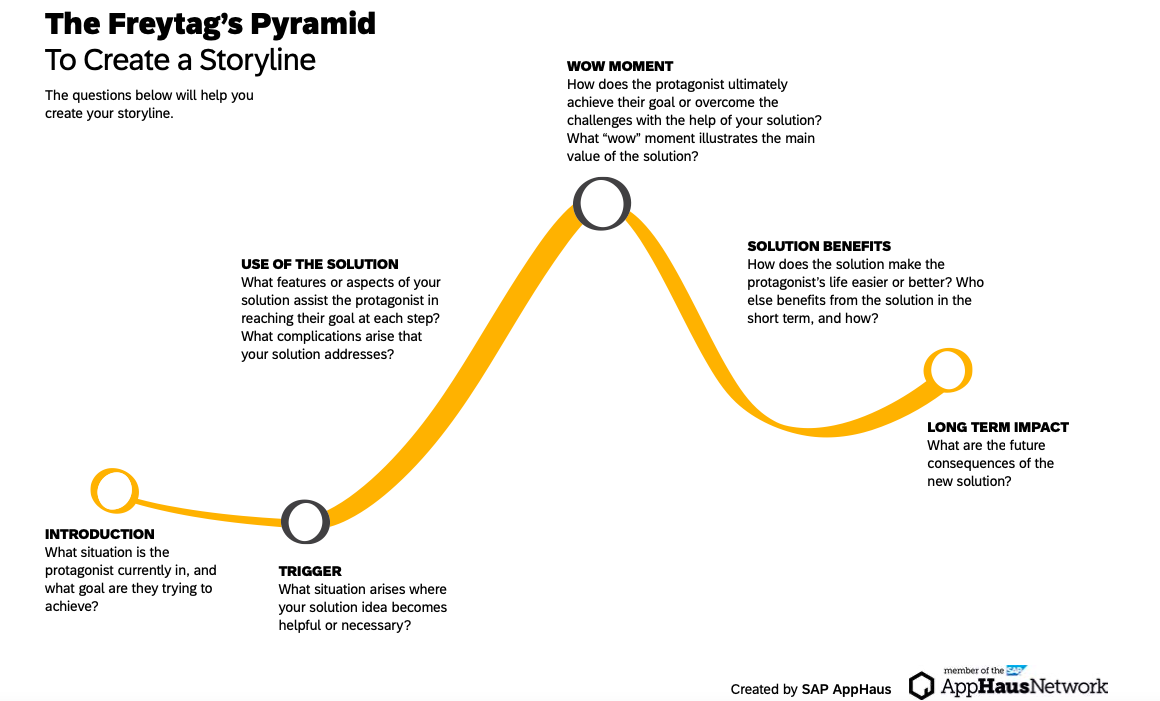
🧭 Freytag’s Pyramid (Structure):
- Exposition – Who is the character / setting?
- Rising Action – What challenge arises?
- Climax – What’s the emotional turning point?
- Falling Action – What follows?
- Resolution – What’s changed?
Why stories work: emotional resonance, clarity, identification
3. 🧩 Explore – Storytelling Canvas
Use the canvas below to plan your story. This works for beneficiary stories, founder moments, or team wins.
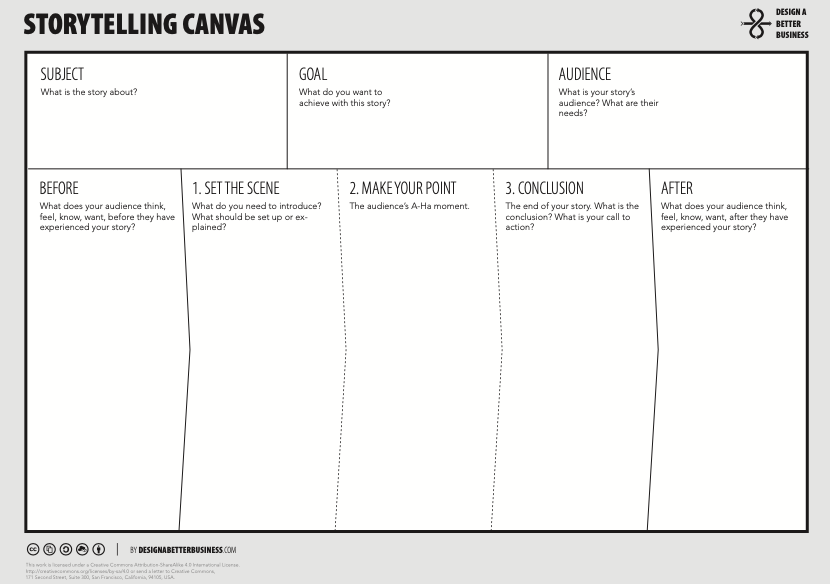
↓ Download: A4 Storytelling Canvas (PDF)
| Canvas Element | Question |
|---|---|
| Who | Who is the protagonist of the story? |
| Context | Where and when does it take place? |
| Challenge | What were they struggling with? |
| Turning Point | What changed the situation? |
| Outcome | What happened as a result? Why does it matter? |
| Mission Link | How does this connect to your social impact or vision? |
💡 Tip: Use sticky notes or blocks for collaborative filling-in during workshops.
4. 🔧 Apply – Your Story in Action
- Pick one stakeholder: beneficiary, team member, funder, policymaker
- Use the Storytelling Canvas to sketch their story
- Apply Freytag’s Pyramid to shape it
- Limit yourself to 5–7 sentences
- Read aloud or share with a peer
If someone quoted this story in front of an audience — would you feel proud?
5. 🔍 Reflect – Your Storytelling Patterns
- Do you tell stories with people at the center — or just your organization?
- Are you hiding behind numbers when a human moment would be more powerful?
- What tone feels natural to you — and what tone would resonate more?
“Which sentence in your story pulled me in — and why?”
6. 🔗 Connect – Tools & Real-World Inspiration
🌎 Resource: SAP AppHaus
Human-centered innovation spaces by SAP. Uses storytelling & co-creation to design tech solutions with emotional resonance.